
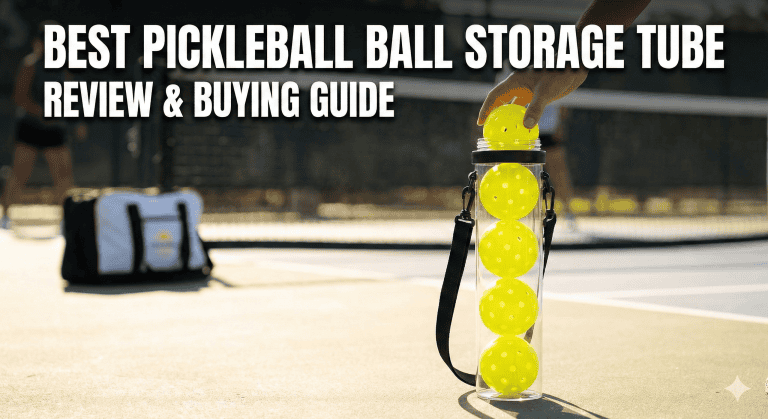
Pickleball is one of the fastest-growing racquet sports, and storing spare balls properly keeps play smooth and extends ball life. A pickleball ball storage tube is a simple cylindrical container that protects balls from dirt, UV exposure, and getting crushed in bags. The best pickleball ball storage tube balances protection, ease of transport, and capacity so you can quickly grab fresh balls for practice or a match.
When choosing a tube, consider material (durable plastic vs. aluminum), closure type (screw cap or snap), capacity (how many balls it holds), and whether it fits your bag or paddle case. We evaluated common designs and features to find tubes that are sturdy, compact, and easy to open on the court, focusing on what actually matters during play and travel. Our testing and research aim to guide you to the best options so you can pick one that matches how and where you play.
Best Pickleball Ball Storage Tubes
Below is our curated list of the best pickleball ball storage tubes to keep balls organized, protected, and easy to transport. We evaluated durability, capacity, materials, and carrying convenience to help you find the right tube for practice, play, or travel.
SELMOR 17-Ball Pickleball Tube

We recommend this if you want a simple, lightweight tool that saves your back and stores up to 17 balls for practice sessions.
Pros
- Picks up balls quickly without bending.
- Stores many balls so you carry fewer containers.
- Adjustable length fits different users and situations.
Cons
- Feels a bit bulky when fully loaded.
- Assembly required and parts are plastic.
- Not as compact as some foldable hoppers.
We took this to a few drills and found the suction-style pickup works the first time most of the time. Sliding the tube over a ball and pressing down captures it almost instantly, which kept our drills moving and reduced pauses between reps.
The three-piece assembly lets us set a comfortable height whether junior players or players in wheelchairs join practice. The strap and light weight make it easy to toss in a car or court bag, though the full tube is noticeably wider than a single paddle cover.
Storage up to 17 balls proved handy for multisession practice: we loaded the tube and moved between stations without juggling loose balls. Durability felt solid for polypropylene plastic, but heavy daily use might show wear sooner than metal alternatives.
Overall, we found the SELMOR tube to be a practical, back-saving tool for regular players who value quick pickups and simple storage; it’s not the smallest option, but it does the job reliably.
Kowaku Pickleball Tube
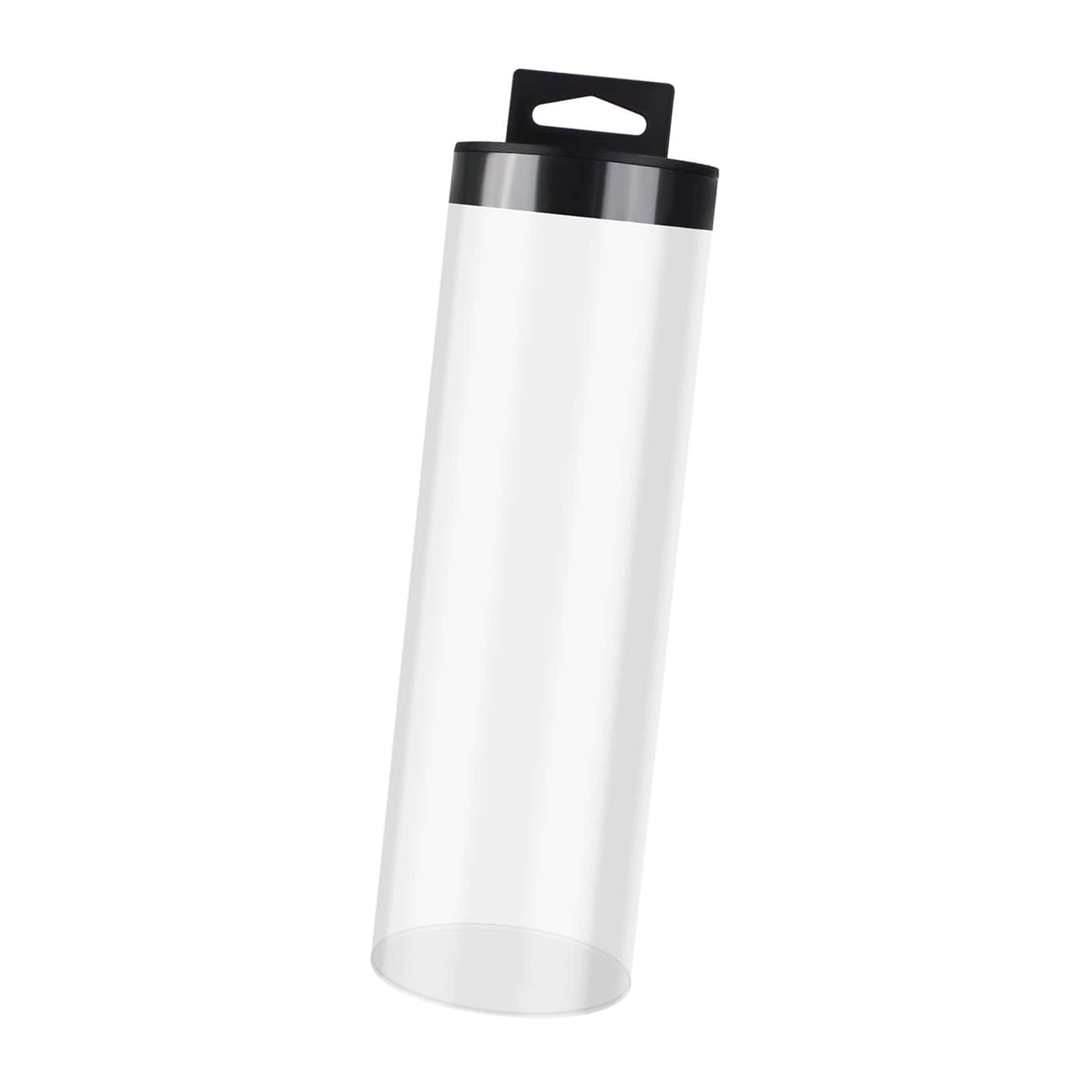
We would buy this if we needed a lightweight, clear tube for short-term ball storage and easy identification, but not if we wanted rugged, long-lasting protection.
Pros
- Clear design makes it quick to see contents and add markings.
- Lightweight polypropylene feels easy to carry to the court.
- Simple lid snaps on and off for fast access.
Cons
- Thin plastic can crack in transit or with rough handling.
- Not a pressurizing canister — won’t extend ball life.
- Limited capacity and protection compared with padded cases.
We used the Kowaku tube for a few weekend sessions and liked how easy it was to spot which balls were inside. The clear shell let us label the tube with a marker so teammates could tell new from used balls at a glance.
Opening and closing is effortless; the lid snaps on firmly but comes off without fuss when we need a replacement ball mid-game. Carrying it between courts felt natural because the plastic is very light.
Durability felt like the trade-off. One of our samples had a stress mark after being tossed in a gear bag, so treat it gently or use it only for transport and short-term storage. The tube won’t pressurize balls, so don’t expect it to preserve bounce.
Overall, we think this works well as an inexpensive, visible ball holder for casual play or teaching sessions, but serious players should look for sturdier, pressurizing options.
JOOLA HC-40 Pickleball Balls (3-Pack)

We recommend this if you want a firm, tournament-style ball that holds shape and travels true on hardcourts.
Pros
- Consistent flight and bounce from precise hole alignment
- Durable one-piece construction that resists deformation
- Compact storage tube keeps three balls protected and easy to grab
Cons
- Feels firmer than many rec balls, which may take adjustment
- Bright yellow scuffs more visibly on outdoor surfaces
- Tube holds only three — frequent players may prefer larger packs
We took these out for several weekend matches and noticed the HC-40s track predictably off the paddle. Serves and drives stayed true with minimal wobble, which helped our timing and placement during rallies.
The balls felt a touch firmer than the Franklin X-40 we usually use, so our wrists and touch shots required a moment to adapt. That firmness does translate to a livelier, more consistent bounce when playing on outdoor hardcourts.
The small storage tube protected balls in our bag and made it easy to stash extras in the car or court bag. If you play often, opt for the 12-pack option to avoid running out mid-week.
Franklin Retriever Tube
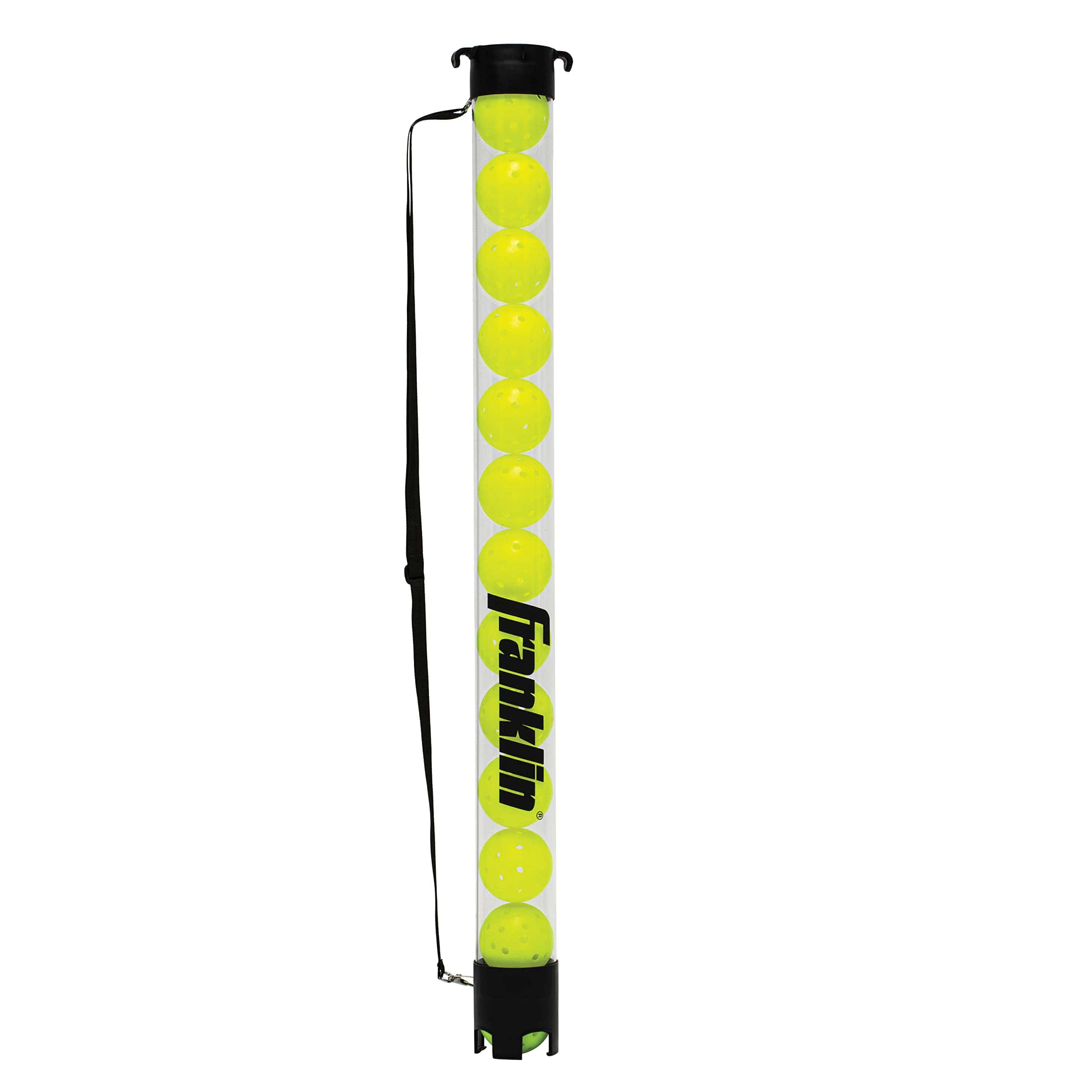
We recommend this if you want a simple, portable way to collect and carry a dozen-plus pickleballs without bending over.
Pros
- Speeds up ball pickup and saves our backs.
- Hooks to fences and carries with the shoulder strap for hands-free transport.
- Holds about 13 standard pickleballs so we don’t need a separate bag.
Cons
- Plastic end pieces feel fragile and can crack under rough use.
- Elastic bands wear out and may need replacing sooner than expected.
- Hard rim can scuff softer practice balls over time.
We used the tube during multiple practice sessions and it noticeably reduced the number of times we stooped for stray balls. The pick-up action is quick: press the tube over a ball and it locks in, then tilt to release — simple and reliably fast for drills.
Hanging it on the fence kept balls within reach and the adjustable shoulder strap made walking between courts effortless. Carrying a full tube felt balanced, though repeated knocks against the ground showed weak spots in the plastic around the ends.
After several weeks the elastics loosened and one end piece came off in a few users’ reports; we recommend keeping glue or spare bands on hand. For casual players and practice groups this is a useful, affordable tool, but heavier hitters or daily club use may wear it out sooner than higher-end metal best pickleball hoppers.
Tourna Pickup Tube

We recommend this if you want a simple, lightweight tool that saves your back during drills and casual play.
Pros
- Saves bending repeatedly, speeding up practice.
- Holds a large number of balls so interruptions are minimal.
- Works on indoor and outdoor balls and on varied surfaces.
Cons
- Plastic hooks that secure bands feel fragile on hard impacts.
- Can spill if not tilted carefully when emptying into containers.
- Limited to about 17 balls — heavy sessions may still need multiple loads.
We used the Tourna tube across a few practice sessions and it felt immediately useful. It really cuts down on bending and keeps drills moving faster.
The intake grabs both indoor and outdoor balls reliably, and the capacity meant fewer pauses to gather balls. Emptying into a hopper or bucket works, though you must angle the tube to avoid losing a couple on the court edge.
We noticed stress on the small plastic hooks after a hard drop on concrete; they aren’t reinforced. Overall, it’s a practical, inexpensive pick-up tool that performs exactly as advertised and becomes handy for coaches and regular players alike.
Pickleball Ball Storage Tube Buying Guide
We prioritize durability and protection when choosing a pickleball ball storage tube. Look for rigid materials like hard plastic or aluminum to prevent crushing and keep balls round. Check for a tight-sealing cap to keep out dirt and moisture.
We value capacity and portability equally. Decide how many balls you typically carry and choose tube length accordingly. Consider a lightweight design with a comfortable carry strap or clip for easy transport.
We inspect closure and retention features closely. A threaded or snap-fit cap reduces accidental openings. Internal padding or dividers help prevent rattling and impact damage during travel.
We assess visibility and accessibility. Transparent or partially clear tubes let us confirm contents quickly. Wide openings and simple one-handed access speed up on-court swaps.
We compare mounting and storage options. Wall-mountable tubes save space in a garage or club room. Stackable designs or flat-sided tubes make organized storage easier.
We check materials and environmental resistance. UV-stabilized plastics and corrosion-resistant metals extend lifespan in sun and humid conditions. Food-safe or BPA-free markings matter if we also store snacks or use tubes around children.
We review weight and balance for carrying comfort. Heavier materials offer strength but add bulk. Aim for a balance that fits our playing and travel habits.
We examine warranty and build quality indicators. Solid seams, consistent finishes, and clear warranty terms signal better manufacturing. We avoid products with vague specs or no return policy.
| Feature | What to look for |
|---|---|
| Material | Rigid plastic or aluminum, UV/corrosion resistant |
| Capacity | Matches the number of balls you carry |
| Closure | Threaded or secure snap-fit cap |
| Portability | Strap, clip, or lightweight design |
| Accessibility | Wide opening, clear body for visibility |
| Mounting | Wall-mountable or stackable options |
| Warranty | Clear terms and solid build quality |
Frequently Asked Questions
We cover specific product picks, materials, and buying tips for pickleball ball storage tubes and retrievers. Expect clear guidance on durability, brands, online purchase checks, and a simple DIY method.
What are the top-rated options for pickleball ball storage tubes?
We recommend rigid PVC tubes with screw-top lids for weather resistance and ease of transport. Commercial favorites include molded plastic tubes with foam inserts that protect balls and fit three to six balls depending on diameter.
How do you choose a durable pickleball ball storage tube?
Look for Schedule 40 or thicker PVC, impact-resistant ABS, or aluminum bodies with rustproof finishes. Check lid seals, reinforced end caps, and UV-stable materials to prevent cracking from sun exposure.
Are there any specific brands recommended for pickleball ball retrievers?
We often cite OnCourt OffCourt and Gamma for durable, sport-focused retrievers that combine storage and pickup features. Local specialty tennis/pickleball brands also produce robust tubes designed to clip to bags or attach to carts.
What should you consider when purchasing a pickleball tube online?
Verify internal diameter versus ball size (standard pickleball diameter ~2.9 inches) and confirm capacity. Read for return policy, shipping damage procedures, and customer photos showing actual product condition.
Can you create a DIY pickleball ball storage tube and how?
Yes. Use a 3–4 foot section of 2.5–3 inch PVC, cap one end with a threaded PVC cap, and glue a removable end cap on the other for access. Add foam padding or felt inside to protect balls and drill drainage holes if you’ll store damp balls.
Is it necessary to invest in a branded pickleball tube or are generic versions sufficient?
Generic tubes made from proper materials meet basic needs and cost less; they suffice for casual play. For frequent outdoor use or travel, branded models with proven seals and fittings reduce long-term replacement risk.

