
Pickleball paddle eraser cleaners remove dust, grit, ball residue, and sweat buildup that reduce grip and control over time. These products range from simple rubber erasers and brush-and-scraper combos to spray cleaners and microfiber pads designed specifically for paddle surfaces. We explain how each type restores tack, prolongs surface life, and preserves a paddle’s original feel.
Buying the right cleaner depends on paddle surface material, frequency of play, and portability needs; some cleaners are gentle enough for textured polymer faces while others suit smooth composite or graphite surfaces without damaging edge guard or paint. The most important thing to check is compatibility with your paddle’s face material—use a product designed for textured polymer if you have polymer-faced paddles, and avoid harsh solvents that can strip tack or finish. We tested and compared popular eraser cleaners, sprays, and pads to identify options that clean effectively without harming the paddle, so readers can move on to our best-of picks and a practical buying guide.
Best Pickleball Paddle Eraser Cleaners
We reviewed top pickleball paddle eraser cleaners for removing scuff marks, dirt, and pickleball residue without damaging paddles. Below is our curated list of the best products to keep your paddle surface clean and playing-ready.
Professor Pickleball Carbon Cleaner
Our top pick easily removes pickleball residue, dirt, and grime from the surface of any raw carbon fiber pickleball paddle. With just a few swipes of the Carbon Cleaner, your paddle will look brand new.

We recommend this cleaner if you own a raw carbon fiber paddle and want an easy, no-fuss way to remove residue and scuffs.
Pros
- Quickly lifts ball residue and dust with a few swipes.
- Durable rubber block that lasts many uses.
- Restores visible texture and keeps paddles looking newer.
Cons
- Only works on raw carbon fiber — not for fiberglass faces.
- Small size can feel awkward on wide paddle faces.
- Results depend on technique; aggressive scrubbing risks finish wear.
We tried the Carbon Cleaner on two raw carbon paddles and it made an immediate, visible difference. Light scuffs and dust disappeared after a few passes, and the face looked noticeably cleaner without any sticky residue left behind.
Applying it felt intuitive: short, controlled strokes across the face worked best. We found that pressing too hard created uneven wear, so a gentle, steady motion preserved the paddle’s texture while clearing clogged fibers.
In play after cleaning, the paddles seemed to regain a touch more bite on the ball — not a dramatic transformation, but enough to notice better spin control on tight shots. For anyone maintaining raw carbon paddles, this is a simple tool that saves time and keeps gear performing closer to new.
Grab one here: Professor Pickleball Carbon Cleaner
Srikel Paddle Eraser
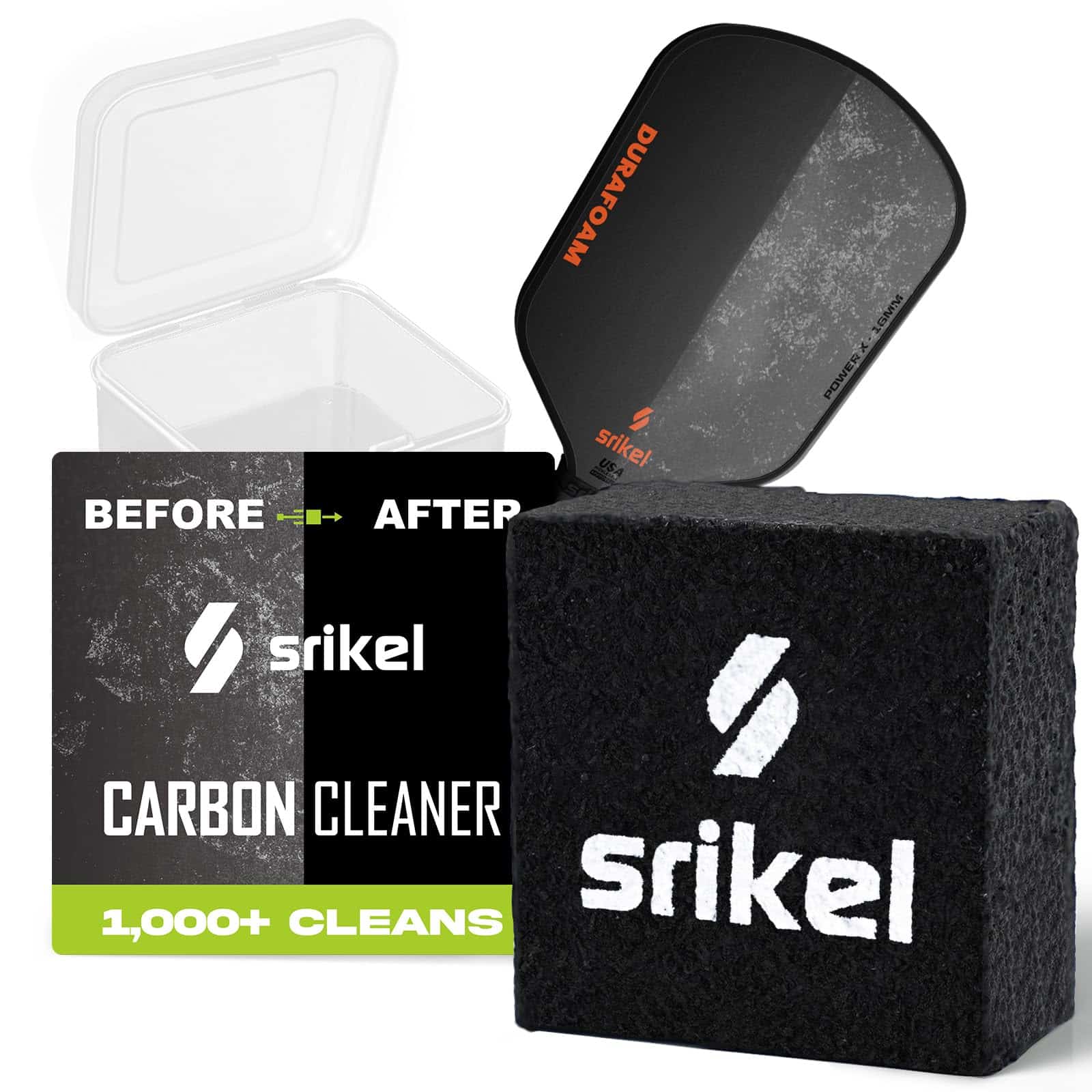
We recommend this if you play with raw carbon fiber paddles and want a compact, durable tool to restore grip and spin between matches.
Pros
- Cleans carbon fiber surfaces quickly with a few firm swipes.
- Small, sturdy design that lasts through many uses and fits in a paddle bag.
- Comes with a carry case so it stays dust-free and travel-ready.
Cons
- Does not work on fiberglass-faced paddles.
- Heavy rubbing can be needed for older, stubborn residue.
- Single rubber piece limits use to surface cleaning only.
We took this eraser to a handful of weekend sessions and used it on a couple of raw carbon fiber paddles. A few brisk passes removed fresh scuff marks and court dust, and we noticed improved ball bite on serves and spin shots right away.
The unit feels solid in hand and the rubber has enough heft to last. We appreciated the small case—keeping the eraser clean in our bag saved time between drills and matches.
On older paddles with built-up grime, the eraser required longer, more deliberate strokes to see a noticeable change. It never scratched the carbon, but it also didn’t revive paddles with deep staining.
If you use a mix of paddle types, check your surface first: this eraser performs only on raw carbon fiber. For players who rely on consistent friction and play frequently, it’s a useful, low-cost maintenance tool that earns a spot in our gear bag.
MGY Paddle Eraser (2-Pack)

We recommend this if you want a simple, portable way to remove ball residue and restore grip on raw carbon fiber paddles.
Pros
- Cleans residue and restores paddle grit effectively.
- Compact, pocket-sized with a protective case for easy transport.
- Durable rubber that lasts through many uses.
Cons
- No instructions included; learning curve for best technique.
- Only for surface cleaning—won’t fix deep scratches.
- Can look dirty quickly and needs occasional washing.
We used the MGY eraser during drills and match play to keep our paddle faces tacky. It removed the plastic shmoo and tiny fibers that build up after long sessions and noticeably restored spin feeling within a few swipes.
The size fits neatly in our pockets and the included case kept it from rubbing other gear. We found the rubber dense and long-lasting; after many uses it still performed without crumbling or losing effectiveness.
Technique mattered: light, even strokes worked better than aggressive scrubbing to avoid altering edges. We rinsed the eraser under warm water when it darkened, and it cleaned up easily for reuse.
This tool won’t repair gouges or deep scratches, but for routine maintenance and keeping grip consistent between games, it’s a reliable, inexpensive add-on to our kit.
BaayCerrie Paddle Eraser
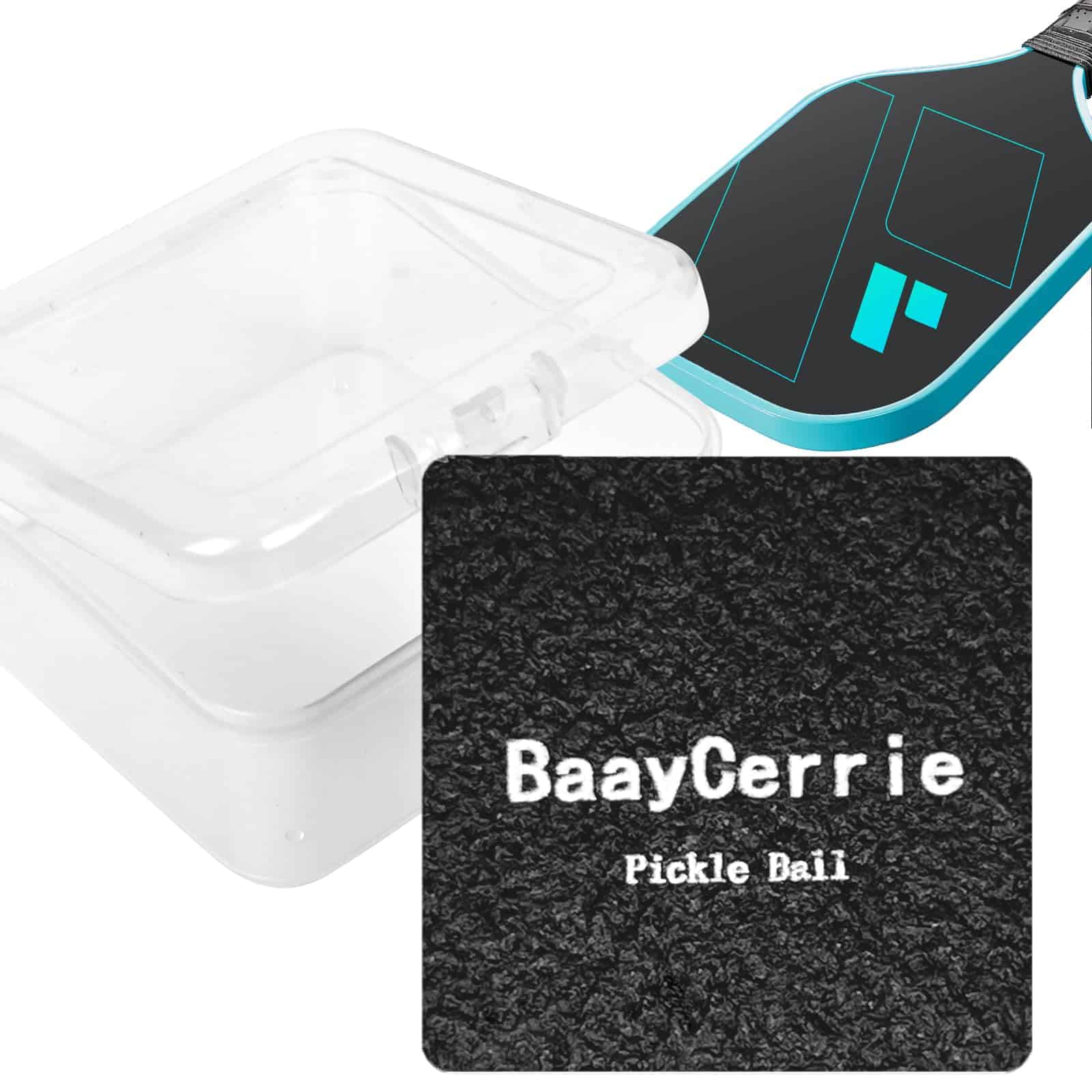
We recommend this if you want a small, durable tool that quickly lifts ball marks and light residue from carbon-fiber paddles without leaving sticky film.
Pros
- Smooth, one-piece design cleans evenly.
- Micro-grooves lift stubborn marks with little effort.
- Compact case keeps the eraser clean and travel-ready.
Cons
- Not a cure-all for deep scratches.
- Very small — easy to misplace if not stored.
- Requires some pressure on heavily soiled spots.
We grabbed this eraser and used it after several sessions to test real-world grime and ball scuffing. It felt dense and solid in hand, and the seamless face made it easy to glide over the paddle without catching on edges.
Cleaning took seconds on light-to-moderate marks; the ultra-fine grooves actually pulled off residue that a towel left behind. We noticed improved ball response and tack compared with an uncleaned paddle, which matters for spin control in play.
On tougher scuffs the eraser reduced visibility but didn’t remove deep gouges — that matches our expectations for a surface cleaner. The plastic case proved handy for carrying in a paddle bag and kept the tool dust-free between uses.
Overall, this is a practical, low-effort maintenance accessory for players who want to preserve surface feel and spin without fuss.
CRBN Paddle Eraser

We recommend this if you want a compact, effective tool to remove ball residue and minor scuffs from carbon-fiber paddles quickly.
Pros
- Cleans ball gunk and dirt with a few firm swipes.
- Small, ergonomic shape fits easily in our paddle bag.
- Works on a wide range of carbon fiber-faced paddles.
Cons
- Requires some elbow grease on stubborn marks.
- Contains latex — not suitable for those with latex allergies.
- Shrink-wrap packaging can be frustrating to open.
We grabbed the CRBN eraser and ran it across several paddles after a sweaty match. It really did lift the tiny plastic fibers and ball marks that had dulled the faces, and our paddles looked noticeably cleaner after just a couple passes.
The rubber bar’s size and shape made it easy to control around the edges and handle grooves. We noticed better visual surface texture afterward, and the grooves felt less clogged — which should help spin consistency even if the change wasn’t dramatic for beginners.
Stubborn scuffs demanded more pressure and time, especially on some non-CRBN brands, so don’t expect miraculous results on heavy scratches. We also had to be careful opening the tight shrink-wrap and would skip this if anyone in our group had a latex allergy.
Overall, this is a handy, low-cost maintenance tool to keep in your bag for routine paddle care; pick up a second one if you like swapping between paddles during sessions.
Pickleball Paddle Eraser Buying Guide
When choosing the best pickleball paddle eraser cleaner, we prioritize pad material and cleaning method when choosing an eraser cleaner. Look for gentle materials that remove dust and scuff marks without abrading or altering the paddle surface.
We check compatibility with paddle face types. Different paddles (textured, polymer, or composite) respond differently to solvents, so prefer cleaners labeled safe for multiple surfaces.
We evaluate ease of use and maintenance. Consider whether the cleaner is a simple rubber eraser, a microfiber pad, or a cleaning fluid with applicator; each affects speed and portability.
We compare durability and refill options. A reusable eraser that holds shape longer reduces waste and cost over time. Replaceable pads or refill inserts extend the product’s useful life.
We assess safety and residue. Choose products that leave minimal residue and avoid harsh chemicals that could degrade grip or surface tackiness. Non-toxic and low-odor formulations protect user health.
We consider portability and storage. Compact, lightweight cleaners fit easily in a paddle bag. A protective case or snap-closure prevents accidental dirt transfer to the paddle face.
We weigh price against expected lifespan and performance. A higher upfront cost can be justified by a longer-lasting cleaner or superior cleaning efficiency. Balance budget with features that matter most to our play style. A good cleaner can increase how long your pickleball paddle lasts.
We look for clear usage instructions and warranty or return policies. Good documentation helps prevent misuse, and reasonable return terms reduce risk if the product fails to meet expectations.
Pickleball Paddle Cleaner Frequently Asked Questions
We address practical cleaning methods, recommend specific paddle erasers, show safe DIY options, and explain frequency and benefits. We also clarify when a regular eraser can and cannot substitute for a purpose-made paddle eraser.
How can you effectively clean a pickleball paddle?
We remove surface dirt and scuff marks by using a dedicated paddle eraser with light, even strokes across the paddle face. For stubborn marks we follow with a soft microfiber cloth dampened with distilled water and wipe dry immediately.
What are the top-rated paddle erasers for pickleball players?
We recommend brands with non-abrasive rubber formulas such as Onix Grip Eraser, Gamma Eraser Pad, and Vulcan Paddle Cleaner. These products consistently remove scuffs without altering paddle texture or edge tape when used as directed.
Are there any DIY solutions for cleaning pickleball paddles?
We use a melamine sponge (Magic Eraser) sparingly at low pressure to lift marks, testing a small area first to ensure no finish removal. A 50/50 mix of distilled water and isopropyl alcohol applied with a microfiber cloth also works for adhesive residue, followed by immediate drying.
How frequently should a pickleball paddle be cleaned with an eraser?
We clean after sessions that leave visible scuffs, ball marks, or dirt buildup; for regular recreational play this often means once every 1–4 weeks. Competitive players should inspect and clean paddles after each match or practice that produces surface marks.
Is it possible to use a regular eraser as an alternative to a pickleball paddle eraser?
We do not recommend standard pencil erasers because they can be too abrasive and leave residue or alter the paddle surface. Only use a regular eraser for very light, localized marks and always test on a small, inconspicuous area first.
What benefits do eraser cleaners offer for pickleball paddle maintenance?
We remove surface contaminants that reduce shot consistency and spin, helping maintain predictable ball response. We also extend the life of the paddle finish and edge tape by preventing grit accumulation that can cause micro-abrasions.

