
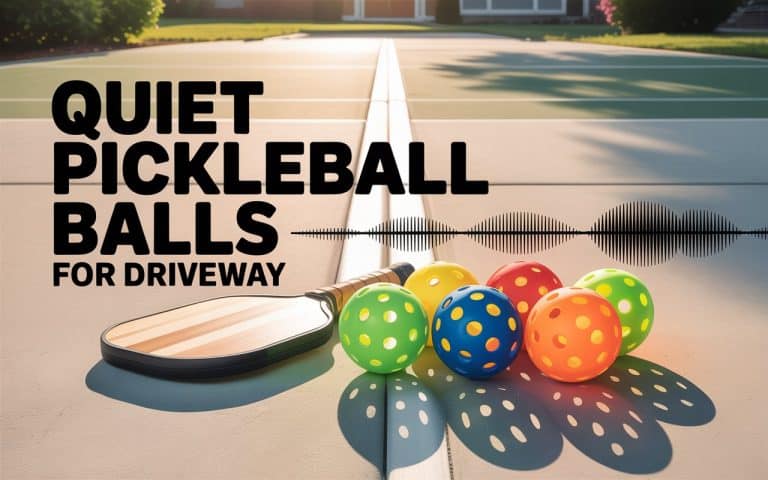
Quiet pickleball balls let players practice and play in shared spaces without drawing complaints from neighbors or startling people inside the house. Designed with softer cores, textured surfaces, or noise-dampening materials, these balls aim to reduce the characteristic pop of standard balls while preserving bounce and durability for driveway play. In our search to find the best quiet pickleball balls for driveways, we evaluated factors like playability, lifespan, and how much sound they actually cut when choosing which models to recommend.
When shopping, pay closest attention to core material and construction, ball weight and bounce, and the trade-off between noise reduction and durability—some quieter balls wear out faster or feel dead compared with standard tournament balls. The most important consideration is finding a ball that meaningfully reduces impact noise while still offering consistent bounce and reasonable longevity for outdoor driveways. We tested multiple options to find balls that strike the best balance for driveway play and will guide you through our top picks and buying advice.
Best Quiet Pickleball Balls for Driveway Play
Below is our curated list of the best quiet pickleball balls for driveway play. We selected options that balance low noise, durable construction, and consistent bounce to keep neighborhood play friendly and long-lasting. Also, don’t forget to grab the best pickleball net for driveways as well.
CRBN Quiet Pickleballs

These are worth buying if you want genuinely quiet, foam practice balls that still feel realistic enough for driveway and garage drills.
Pros
- Very low noise—neighbors barely notice wall drills.
- Noticeable, consistent bounce that mimics real play.
- Soft, safe for kids and indoor use.
Cons
- Feels lighter than regulation balls, so timing shifts.
- Foam can show scuffs after heavy outdoor use.
- Higher price than some other quiet options.
We took these to the driveway and the garage to test volleys and wall drills. The first thing we noticed was how little sound they made on impact—no sharp pops and almost no bounce-slap on concrete.
Timing adjusted quickly because the balls are lighter than standard pickleballs, but the bounce pattern stayed reliable during drills. Our serves and dinks required a small tweak, yet the feedback let us practice control without waking the whole block.
Durability held up for backyard use, though repeated scrapes left visible wear on the foam. They stayed intact and usable, but we’d avoid prolonged rough-surface play if you want them to look new.
Kids and beginners took to them immediately; the soft construction removed the worry of stray shots indoors. Pairing them with softer paddles makes for the quietest setup we’ve used for early-morning or late-night practice.
GoSports Q-Foam Pickleballs
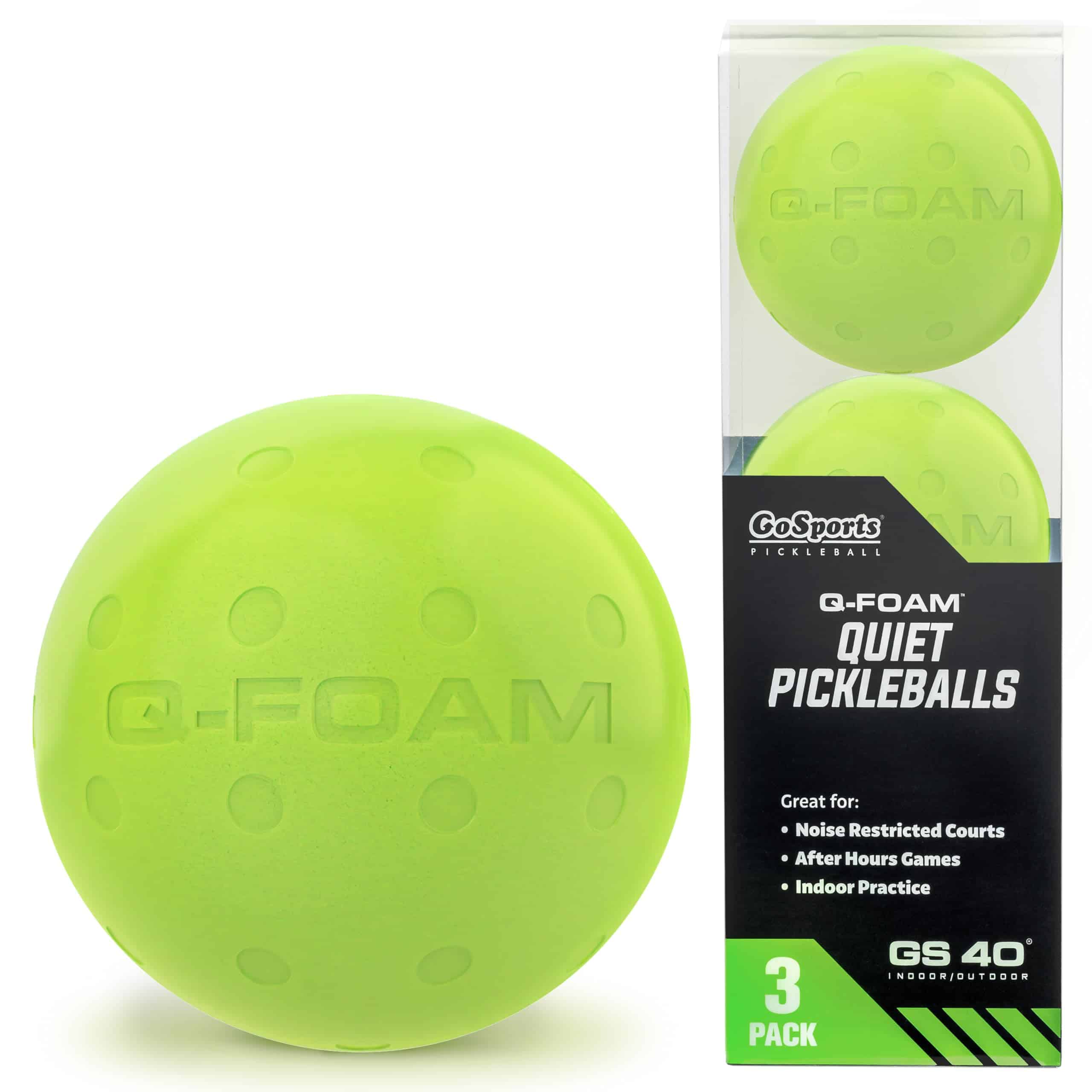
We recommend these if you need a genuinely quieter, safer ball for driveway or garage practice without giving up a realistic feel.
Pros
- Noticeably quieter than hard plastic balls for late-night or noise-restricted areas.
- Soft foam reduces stinging from misses and is safer for beginners and seniors.
- Predictable, slightly slower bounce helps build control and longer rallies.
Cons
- Not tournament-legal — won’t replicate true game-speed or spin.
- Moves slower through the air, so transition to real balls can feel different.
- Foam can scuff or compress over heavy outdoor surfaces faster than plastic.
We used these in our driveway and the difference in neighborhood noise was obvious. The Q-Foam hits with a muted thud instead of a sharp clack, so evenings and early mornings felt worry-free.
Our rallies lasted longer because the ball decelerates a bit, which helped drills and short dinking sessions. The softer profile made missed strikes less painful and more forgiving during pick-up practice.
On rough asphalt the balls show wear faster than plastics, and they won’t teach you edge-of-court speed or spin proneness. Still, for skill-building, indoor walls, and quiet backyard play they performed exactly as advertised.
Buy a 3-pack to test them in your driveway and see if the slower pace matches your practice goals: GoSports Q-Foam Pickleballs.
Gamma Librarian Foam Pickleball
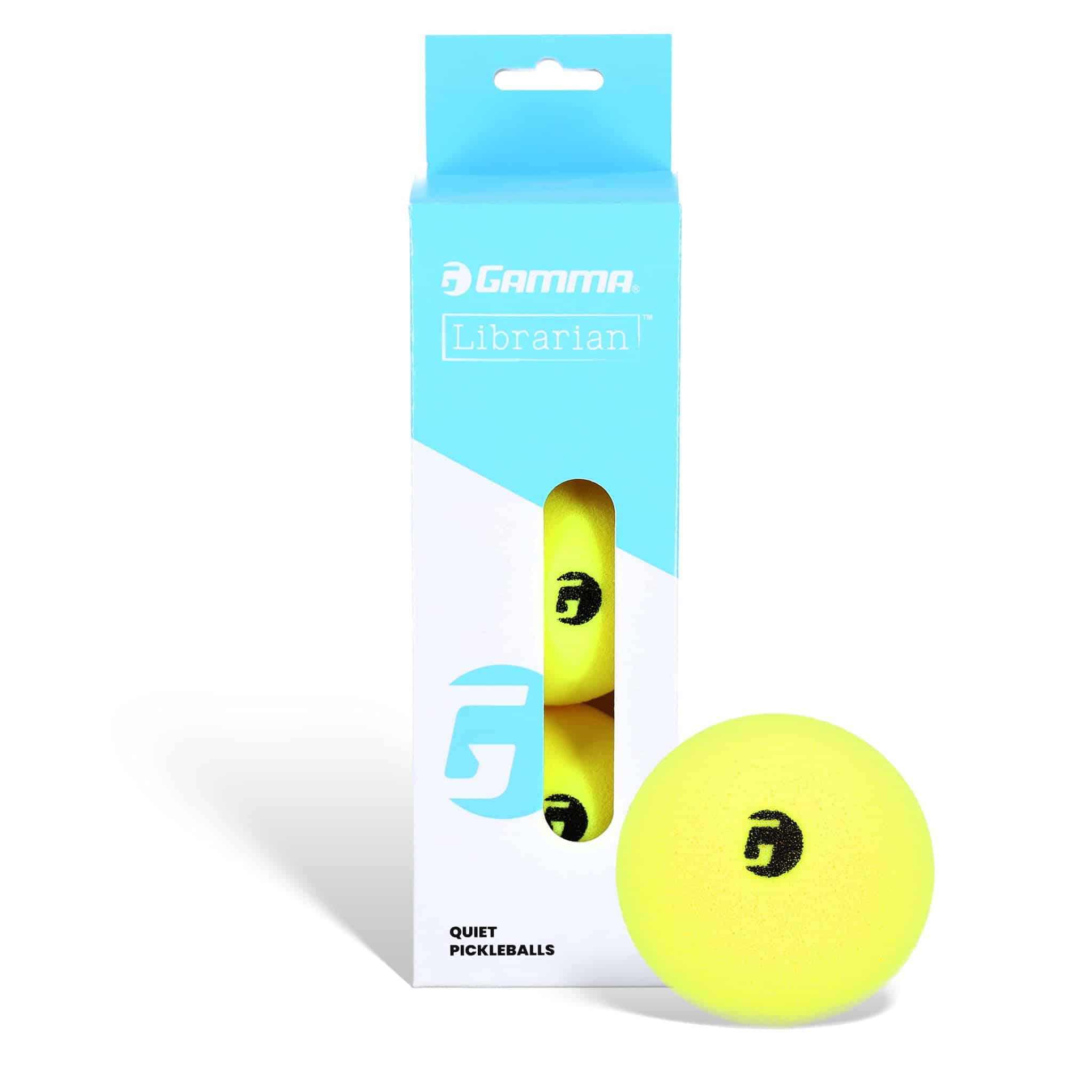
We recommend these if you need very low-noise practice balls that still feel close to a real pickleball for driveway or driveway-adjacent drills.
Pros
- Very quiet compared with hard plastic balls — neighbors notice less.
- Foam gives predictable bounce for solo wall drills and warmups.
- Bright yellow stays easy to track in daylight and shaded driveways.
Cons
- Not exactly the same sound cue as a normal ball, so timing feels different at first.
- Foam compresses on impact, which slightly changes spin and shot feel.
- Less durable long-term if you hit rough pavement frequently.
We took these out to the driveway and used them against a playback wall and with partner drills. The first thing we noticed was the drop in noise: impacts landed around conversation level, which made evening practice more tolerable for nearby homes.
The bounce surprised us by matching typical drills closely; volleys and feeds remained usable and consistent across a few sessions. Our hands adjusted to the slightly muted feedback after a handful of rallies, but we still felt a subtle timing shift on serves and quick exchanges.
After repeated use on rough concrete, the foam showed wear faster than traditional balls, so we treat these as training-only rather than tournament replacements. Overall, they make driveway practice practical without annoying neighbors and work best for skill-building and light matches.
CORE Stealth Quiet Pickleball Balls
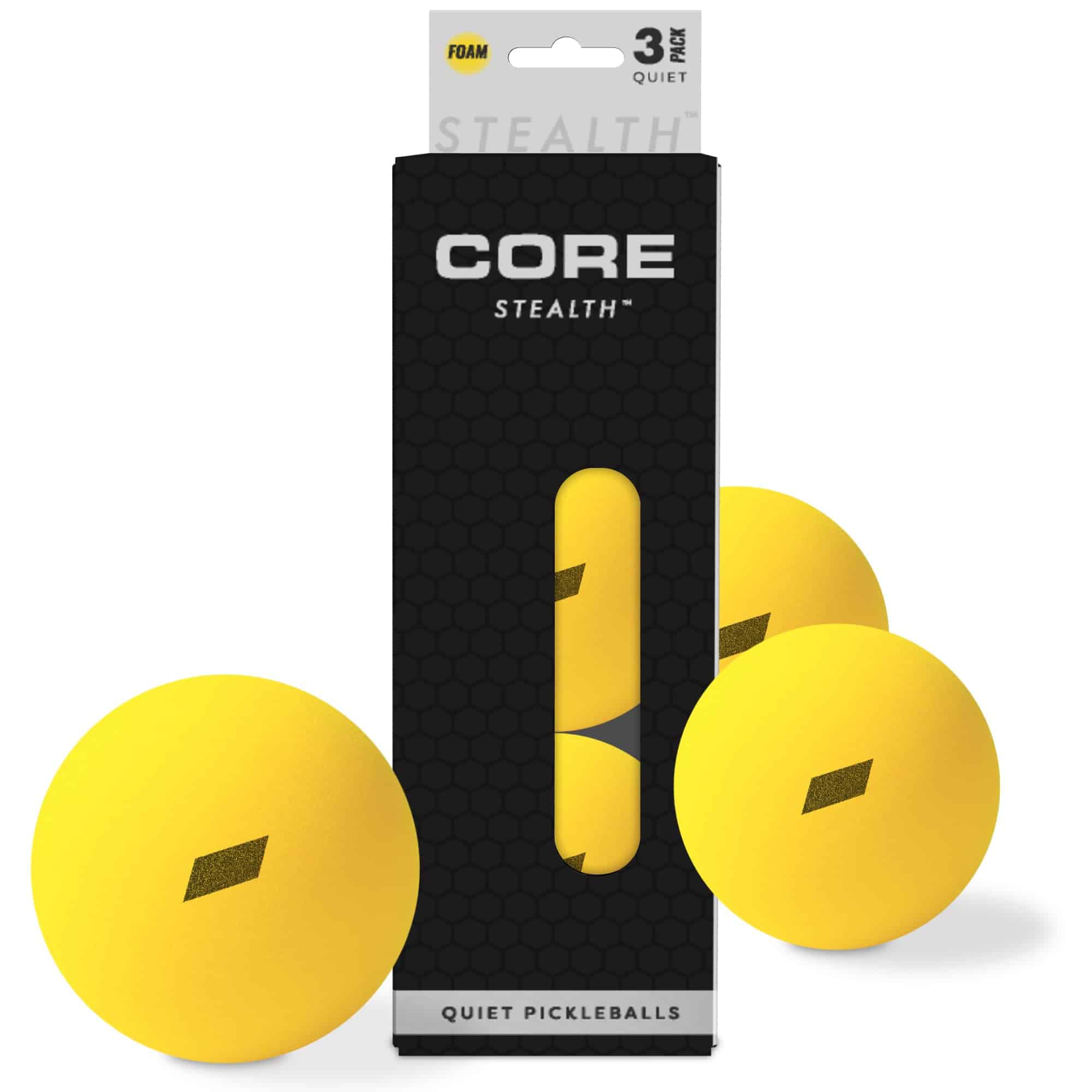
We recommend these if you want a genuinely quiet, practice-friendly ball for driveway or indoor drills without the sharp clack of standard balls.
Pros
- Noticeably silent on impact, ideal for early morning or shared-space practice
- Soft foam construction spares walls and windows during wall drills
- Feels bouncy and playable for casual practice sessions
Cons
- Not as durable for heavy outdoor play or aggressive hitters
- Slightly different flight and speed compared with regulation hard balls
- May feel too fast or light for players used to competitive outdoor balls
We took these out to the driveway and against the garage door and immediately appreciated the reduced noise. The soft foam stopped the sharp ping you get from hard-cored balls, and neighbors didn’t flinch during our drills.
Our touch and dinks translated well from paddle to ball; the bounce felt consistent and predictable for practicing volleys and wall work. On the other hand, sustained outdoor use on rough surfaces showed wear faster than with standard plastic balls.
We found the CORE Stealth set best for solo practice, warm-ups, and times when noise matters more than match-grade performance. For casual players and families who want to keep the peace while playing, these deliver a solid, quiet option.
CORE Stealth Quiet Pickleball Balls
Ninja Ball (Enhance Pickleball)
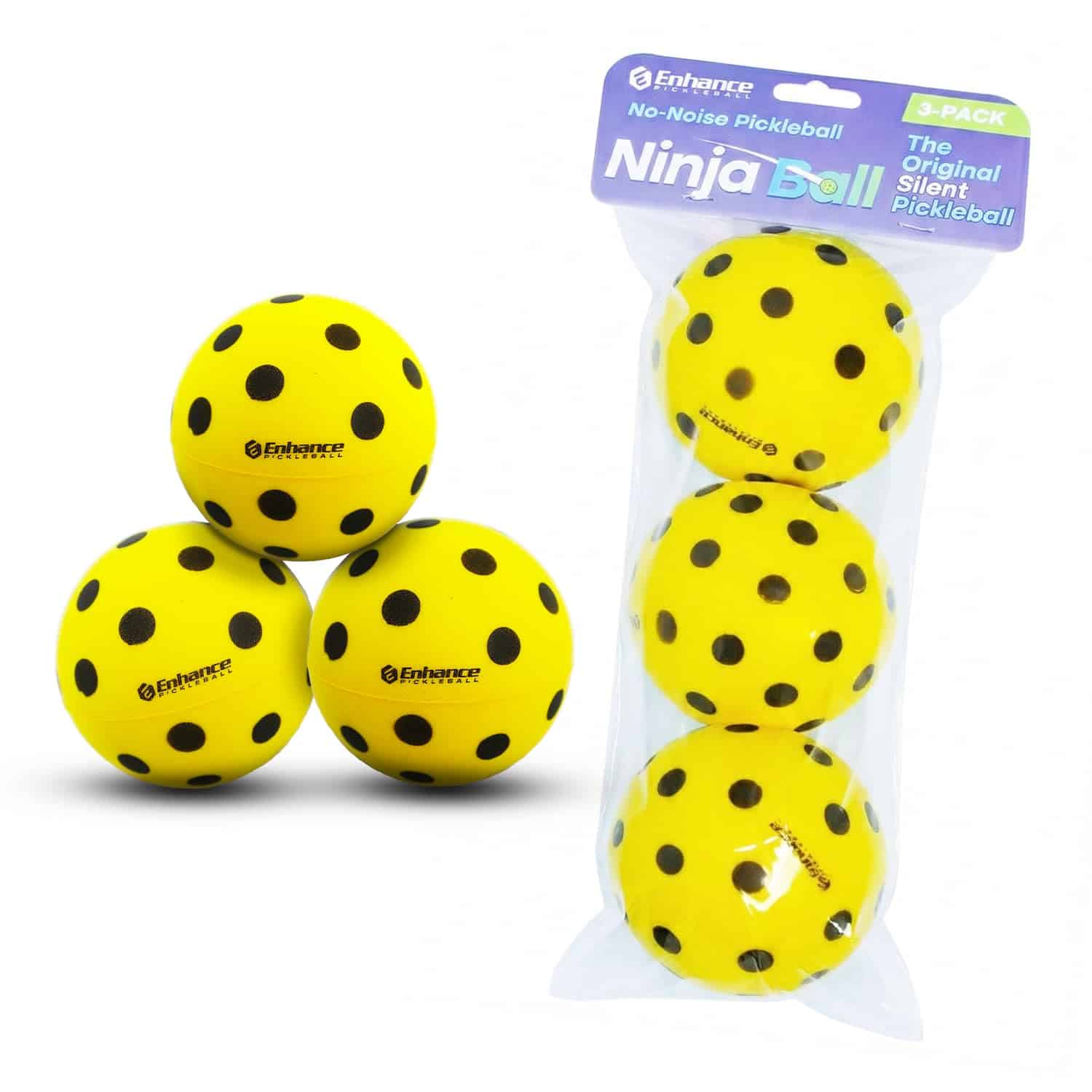
We recommend the Ninja Ball if you want a genuinely quiet, foam practice ball that lets you drill at home without disturbing neighbors.
Pros
- Very quiet compared with hard outdoor pickleballs.
- Soft foam lets us practice against walls and indoors without damaging surfaces.
- Feels close to a real ball for paddle work and footwork drills.
Cons
- Bounce and feel differ noticeably from a regulation ball.
- Still makes a muted thump on hard walls or concrete.
- Foam can show wear faster with heavy outdoor use.
We took these out to the driveway and into the garage for several sessions. The first thing we noticed was how much less noise they produced — no sharp clacks, just a low, dull bounce sound that didn’t draw the neighbors’ attention. That made serving and volley drills at odd hours practical.
Using them against a painted garage wall felt safe; the ball didn’t chip paint or dent siding like a standard pickleball would. Shots off the paddle felt softer, and we had to adjust timing slightly because the ball compresses more on impact.
Practicing with partners worked well for control and placement work, though some of our group missed the crisp “thwack” of a real ball during rallies. For solo wall drills and quiet practice sessions, these deliver real value; for match-feel training, they’re a helpful supplement rather than a full replacement.
Pick one up here: Enhance Pickleball Ninja Ball – The Original Silent Pickleball
Buying Guide
We focus on noise reduction, durability, and playability when choosing quiet pickleball balls for driveway use. Consider how the ball strikes pavement and how sound levels change with different materials.
We look for material and construction first. Hollow polymer balls produce less sound than thin, brittle plastics; thickness and wall stiffness affect bounce and noise.
We evaluate durability next. Driveway surfaces are abrasive, so choose balls with thicker walls or reinforced seams. Expect trade-offs: more durable often means slightly firmer feel.
We assess playability features. Look at weight, diameter, and hole pattern because they influence flight stability and bounce. Lighter balls reduce impact noise but may be more affected by wind.
We recommend testing performance on your surface before buying in quantity. Try a single or small pack to judge sound and wear. Note how the ball responds to driveways versus softer courts.
We check compatibility with our skill level and player preferences. Beginners may prefer slightly slower, lower-bounce options; experienced players might choose firmer balls that hold spin better. Balance noise goals with desired feel.
We compare cost-per-ball and warranty or return options. Cheaper balls may wear out faster and increase long-term cost. A reasonable trial policy helps ensure the ball meets both noise and play expectations.
Quick checklist
- Material and wall thickness
- Weight and diameter
- Hole pattern and aerodynamics
- Durability for rough surfaces
- Trial/return policy and cost-per-ball
